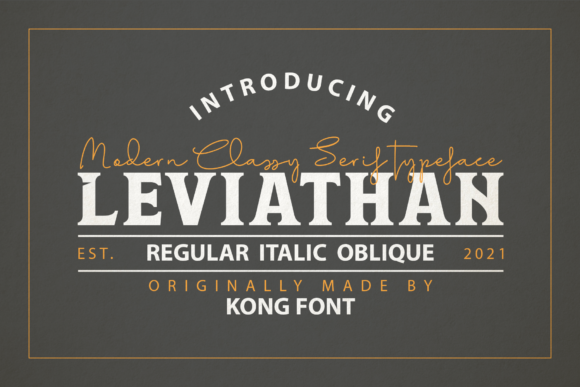
Leviathan: A Playful Handwritten Script Font for Digital Designers
As a UI designer who builds landing pages, SaaS dashboards, and conversion-optimized online stores, I test dozens of Fonts each month — but Leviathan stands out not just for its charm, but for how it performs in real web contexts. Leviathan is a modern and playful handwritten script font that balances personality with purpose. It’s not a decorative afterthought — it’s a strategic Freebies asset that brings warmth, approachability, and visual rhythm to digital interfaces where human connection matters.
Leviathan for Hero Sections and Conversion-Focused Landing Pages
Leviathan excels in hero sections where first impressions drive scroll depth and click-through. Its open letterforms and gentle bounce create instant visual relief against clean sans-serif body text — making headlines feel inviting rather than intimidating. On a coaching website or course sales page, pairing Leviathan with a neutral sans like Inter or Manrope creates clear visual hierarchy: the script draws attention, the sans delivers clarity. Because Leviathan is designed with generous x-height and spacing, it remains legible even at 48–60px on desktop and scales cleanly down to 36px on tablet — critical for responsive hero layouts. Avoid using it below 28px or for full paragraphs; reserve it for short, high-impact phrases like “Start Your Journey” or “Handcrafted Just for You.”
Leviathan for Online Store Banners and Product Branding
E-commerce designers know that product banners need to convey tone before users read a single word. Leviathan works exceptionally well for boutique online stores — think handmade ceramics, indie skincare, or artisanal stationery — where authenticity and craftsmanship are core brand values. When layered over soft-textured backgrounds or subtle gradients, Leviathan adds tactile warmth without sacrificing digital polish. Use it for limited-time offer banners (“Summer Sale Starts Now”), collection headers (“New Arrivals”), or brand taglines beneath logos. Since Leviathan is compatible with tools such as Photoshop and Silhouette Design Studio, you can quickly adapt it for Shopify banner assets, email header graphics, or Instagram Story templates — all while maintaining consistent voice across touchpoints.
Leviathan for Creative Portfolios and Designer Brand Kits
If you’re a freelance web designer, UI creator, or digital product strategist building your own portfolio site, Leviathan helps signal creative fluency without leaning into cliché. Unlike overly ornate scripts, Leviathan has restrained flourishes — no excessive swashes or unpredictable ligatures — so it feels intentional, not chaotic. It pairs naturally with geometric sans-serifs (like Poppins or Space Grotesk) for project titles and body copy, reinforcing professionalism while keeping personality front and center. As part of your branded web experience, use Leviathan consistently for section dividers, testimonial accents, or “About Me” subheads — never for navigation menus or form labels. This selective application builds recognition and strengthens your digital identity across devices.
Leviathan for Blog Headers and Editorial Web Content
Blog headers set the emotional temperature for long-form content. Leviathan brings editorial warmth to tutorials, founder stories, or design process breakdowns — especially when readers expect empathy over authority. Try it for H2s in knowledge-base articles (“Why Typography Shapes Trust”) or newsletter subject lines rendered as web-safe image headers. For accessibility, always pair Leviathan with sufficient contrast (minimum 4.5:1 against light or dark backgrounds) and avoid placing it directly over busy imagery unless you add a subtle semi-transparent overlay. Since Leviathan is a display font — not a body font — keep usage tight: one headline per section, maximum two per page. That restraint makes each appearance feel deliberate and memorable.
Leviathan for Mobile-First Buttons and CTA Elements
On mobile, CTAs live or die by scannability and emotional resonance. Leviathan shines in short, action-driven buttons — “Get Started,” “Join the List,” “Download Your Kit” — especially when styled with soft shadows or subtle stroke effects. Its handwritten rhythm signals friendliness and lowers perceived friction, which supports higher tap rates. But be precise: use Leviathan only on primary CTAs above the fold, never on secondary actions or system-level buttons (e.g., “Cancel,” “Back”). Test rendering across iOS and Android — most modern browsers handle Leviathan smoothly as a webfont, but always verify fallback behavior if self-hosting. And remember: Leviathan is a Freebies resource, but confirm licensing covers commercial use — including client websites, SaaS dashboards, and digital templates sold on marketplaces.
Leviathan for Social Media Graphics and Cross-Platform Consistency
When your brand lives across Instagram carousels, LinkedIn banners, and Pinterest pins, consistency isn’t optional — it’s foundational. Leviathan gives social creatives a unifying typographic thread. Use it for quote graphics, launch announcements, or workshop promo tiles — always paired with the same supporting typeface and color palette. Because it’s compatible with tools such as Photoshop and Silhouette Design Studio, you can batch-export variants for different aspect ratios without losing fidelity. For best results, export as PNG with transparent background and embed in Canva or Figma for rapid iteration. Just don’t stretch or distort the glyphs — Leviathan’s playfulness relies on natural proportions.
Practical Font Pairing Tips for Web Designers Using Leviathan
- For clean digital products: Pair Leviathan with Inter (variable font) — use Inter for all interface text and Leviathan only for logo lockups and marketing banners.
- For editorial SaaS sites: Combine Leviathan with a warm serif like Lora or Crimson Pro for blog headers, then switch to a neutral sans for UI labels.
- For dark-mode interfaces: Apply a 1px white stroke or subtle text-shadow to ensure Leviathan remains crisp against deep backgrounds.
- For multilingual support: Verify character coverage — while Leviathan handles English beautifully, check extended Latin glyphs if supporting French, Spanish, or Portuguese.